
Edgardo Díaz-Ferguson, Luisa F. Echeverria-King, Branislav Pantović, Johanna Segovia, Yani Aranguren, Ernesto Brugnoli, Pablo Muniz, Andrea Weiler, Eric Flores de Gracia, Álvaro Morales Ramírez, Eloisa Lasso, Joel Sánchez-Gallego, Karly Urriola-Garcia, Rodrigo Sant Ana, Sofía Zapata, Andrea Cancela da Cruz, Anabella Vásquez Fábrega, Claudia Alarcón-López, Marcella Ohira
Description
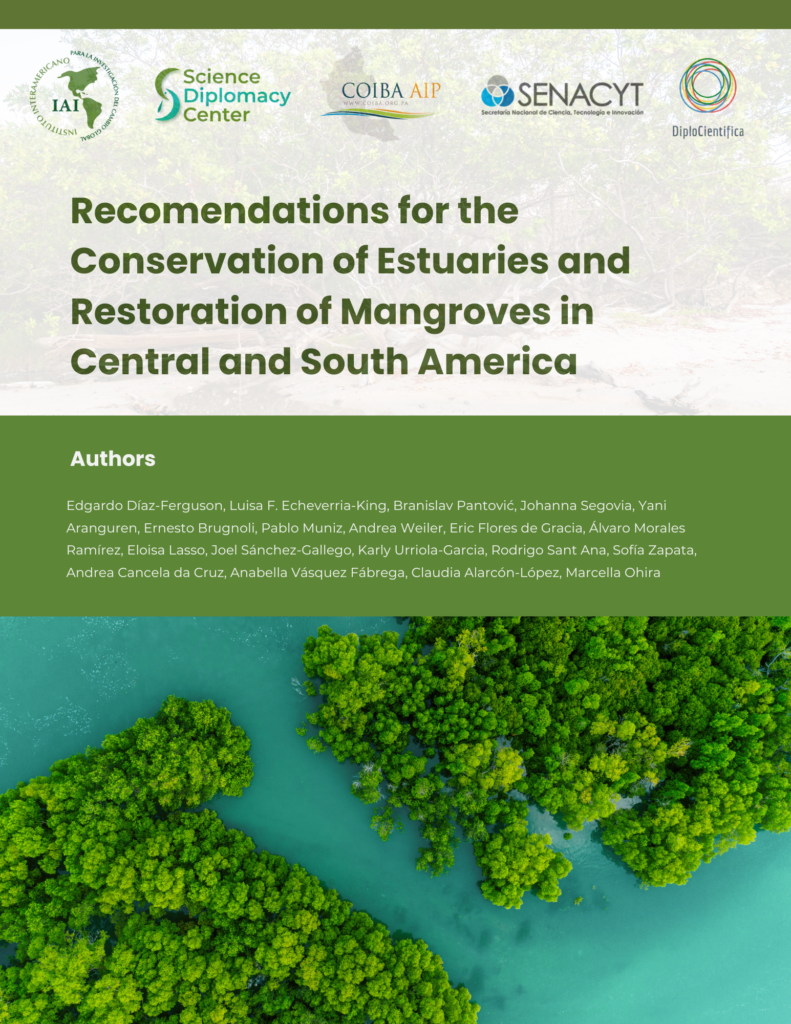
This white paper highlights the critical importance of estuaries and mangroves in Central and South America, emphasizing their role in biodiversity, climate regulation, and coastal protection. These ecosystems, which are essential for carbon capture and climate change mitigation, face threats such as climate change, pollution, and urbanization. Based on a science diplomacy workshop held in Panama in 2024, recommendations are offered for public policies focused on the conservation and restoration of these habitats. It proposes implementing programs for conservation, biodiversity monitoring, water management, pollution reduction, and protection of vulnerable species. In addition, it highlights the need for sustainable activities, investment in research, public education, and inclusive governance, as well as cross-border cooperation and the active participation of local communities. Case studies from the Coiba Archipelago in Panama and the Gulf of Nicoya in Costa Rica are included, exemplifying successful sustainable management strategies. This comprehensive framework aims to guide decision-makers in implementing sustainable strategies to address environmental challenges and ensure the health and resilience of estuaries and mangroves in Central and South America.